AI seminar at Ô°ÇøÒùÂÒ explores new possibilities for Chinese language teaching
The Confucius Institute at the University of Ô°ÇøÒùÂÒ and the School of International Chinese Language Education at Beijing Normal University jointly hosted "AI Empowering Chinese Language Classrooms: Case Studies, Methods, and Tool Applications"
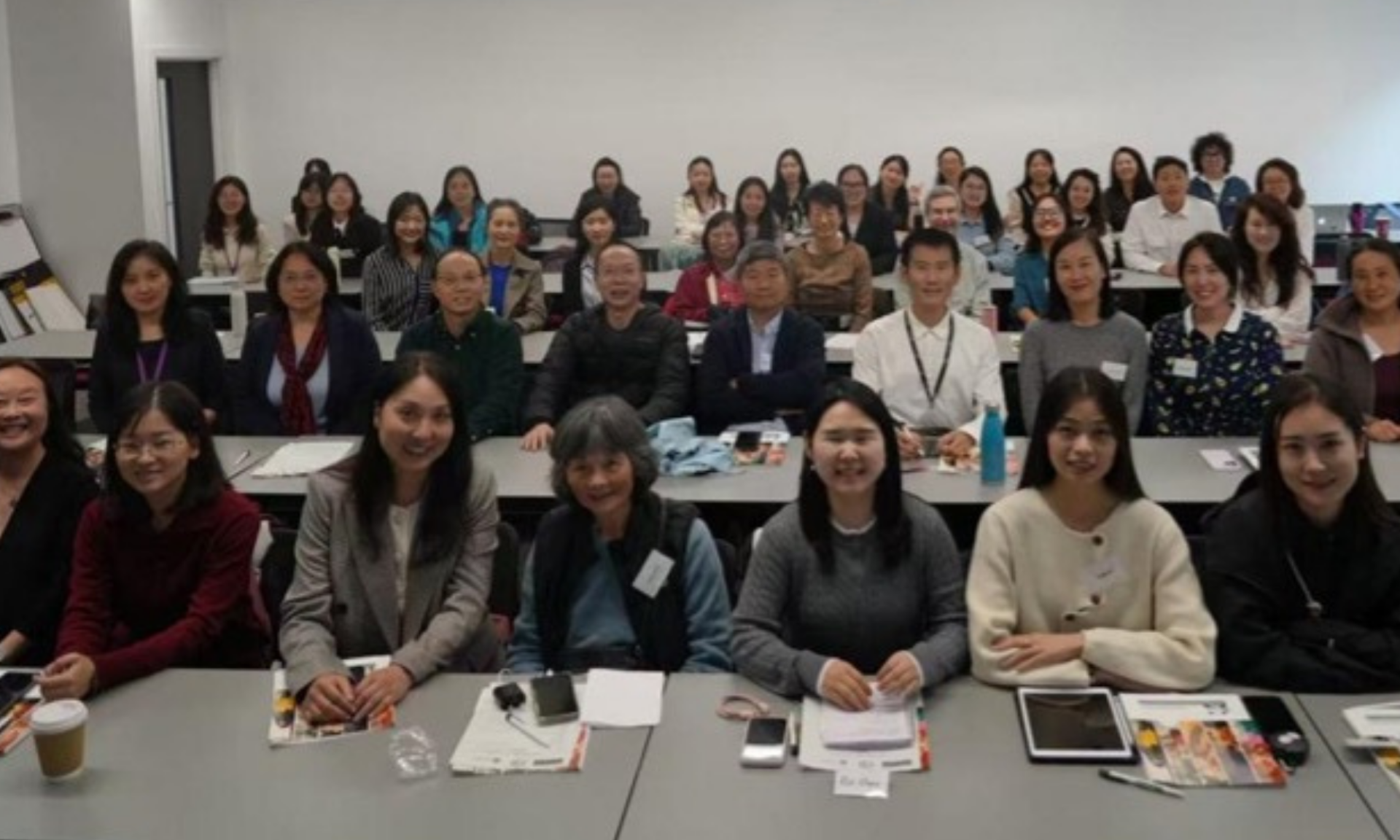
The six-hour seminar took place on 20 September 2025 and brought together over sixty scholars, teachers and students from the UK and China, participating both in person and online.
Structured around a complete teaching cycle — from understanding new technologies and designing learning activities to classroom implementation and teacher development — the event featured keynote presentations, live demonstrations and interactive discussions. The programme aimed to provide practical, replicable approaches that teachers can directly apply in their own classrooms, while exploring how AI can be meaningfully integrated into Chinese language education and how it can support teachers' professional growth.
The seminar opened with a presentation by Professor Yang Quan from Beijing Normal University titled "A New Paradigm for Smart Chinese Language Majors Driven by Knowledge Graphs." Professor Yang discussed how knowledge graphs and AI tools can help reshape curriculum systems and drive the development of more intelligent programmes in international Chinese language education.
Professor Yang Lijiao, also from Beijing Normal University, delivered a talk on "Applications of AI in International Chinese Language Education," introducing the latest research from her team on an AI-based readability assessment system for Chinese texts — a tool designed to support teachers in selecting and adapting appropriate teaching materials.
Shui Bingling, a postgraduate student in International Chinese Language Education at Beijing Normal University and a former volunteer teacher at the Confucius Institute at the University of Ô°ÇøÒùÂÒ, presented "Applications and Practice of AI in Classroom Game Design." Through a series of case studies, she demonstrated how prompt-based AI tools can help teachers design engaging classroom activities and improve lesson preparation efficiency.
The seminar also featured two sessions by Xuan Li, Principal Tutor in Chinese at the School of Oriental and African Studies (SOAS), University of London. Drawing on her extensive classroom experience, she addressed the evolving role of language teachers in the digital era in her talk "From Traditional Lecturer to Learning Designer," arguing that teachers should embrace digital tools while remaining grounded in the fundamental purpose of education. In a second session on selecting and applying digital teaching tools, she introduced practical strategies for classroom management and the creation of multimodal teaching materials — an approach participants described as immediately applicable to their own teaching contexts.
As technologies such as large language models, generative AI and natural language processing continue to reshape education, international Chinese language education faces both new opportunities and pressing questions about how to avoid superficial or tokenistic uses of technology. The seminar provided a valuable cross-institutional platform for researchers and educators from the UK and China to exchange ideas and reflect on these challenges together.
Participants highlighted the seminar's strong focus on practical, classroom-ready applications, and noted that discussions on the essential nature of education in the AI era offered fresh perspectives on the future direction of Chinese language teaching.
As the closing discussion emphasised: the Chinese language classroom of the future should not simply become a stage for technology, but a space where technology and the humanities are meaningfully integrated.