Fault lines found to both drive and dampen volcanic activity
Researchers have uncovered how major geological faults can simultaneously channel magma towards the surface and prevent volcanic eruptions, offering fresh insight into how eruptions begin, and why some never happen.
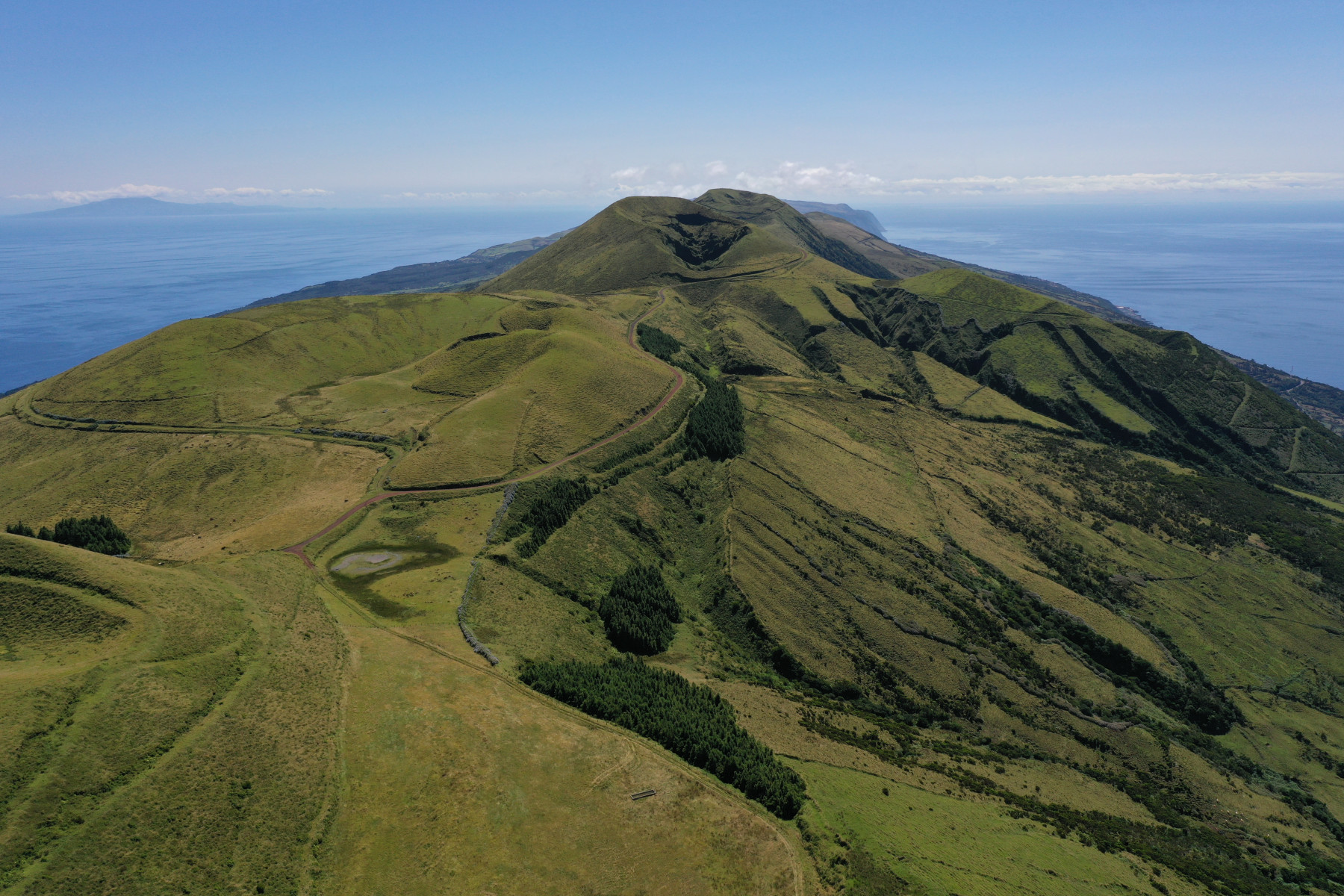
The findings, published in , come from an international study examining a significant episode of volcanic unrest on São Jorge Island in the Azores in March 2022.
By combining detailed earthquake records from land and seabed instruments with satellite-based measurements of ground movement, scientists were able to reconstruct how magma travelled deep beneath the island with unprecedented precision.
The team discovered that a vertical sheet of magma, known as a dike, surged upwards from depths exceeding 20 kilometres before stalling just 1.6 kilometres below the surface.
Surprisingly, much of this upward movement occurred with minimal seismic warning. Instead, earthquake activity intensified only after the magma’s ascent had slowed, presenting a challenge for eruption forecasting.
Satellite data also showed that the island’s surface rose by around six centimetres during the event, confirming that magma had entered the upper crust. However, because the intrusion failed to reach the surface, no eruption occurred, a phenomenon scientists describe as a “failed eruption�. Such intrusions help to grow islands and this study’s unprecedented sharp earthquake maps show how this happens.
The magma rose through one of the island’s main fault systems, the Pico do Carvão Fault Zone. By studying geological traces left by ancient earthquakes, scientists had previously found that this fault system has produced large earthquakes in the past. Rather than producing a single large earthquake, as seen in past seismic activity, the magma intrusion generated numerous small earthquakes distributed along the fault.
The team, led by Dr Stephen Hicks, based at UCL Earth Sciences, conclude that the fault acted as both a conduit and a release mechanism. It provided a pathway for magma to rise, but also allowed gas and fluids to escape sideways, reducing pressure within the magma and ultimately halting its progress.
Co-lead author Pablo J. González, of the Spanish National Research Council (IPNA-CSIC), explained:
“The fault acted like both a highway and a leak. It helped magma rise, but may also have prevented an eruption.�
, Reader in Marine Geophysics at The University of Ô°ÇøÒùÂÒ, supported the project as co-proponent and in discussing the results.
The study demonstrates that significant magma movements can occur rapidly and with limited early warning signs, emphasising the importance of integrating multiple monitoring techniques to better assess volcanic risk.
By combining onshore and offshore geophysical data, the researchers were able to achieve highly accurate detection and mapping of seismic activity and ground deformation, providing valuable information for local hazard assessments.
The research reflects a large-scale collaborative effort, involving institutions across the UK, Portugal and Spain, supported by funding from organisations including the Natural Environment Research Council (NERC), the European Research Council, and Fundação para a Ciência e a Tecnologia.
Paper details:
Full title: Fault-mediated magma propagation and triggered seismicity revealed by the 2022 São Jorge Azores unrest
Journal:
DOI: 10.1038/s41467-026-71668-6
URL: