How simply turning up the heat could transform chemical manufacturing
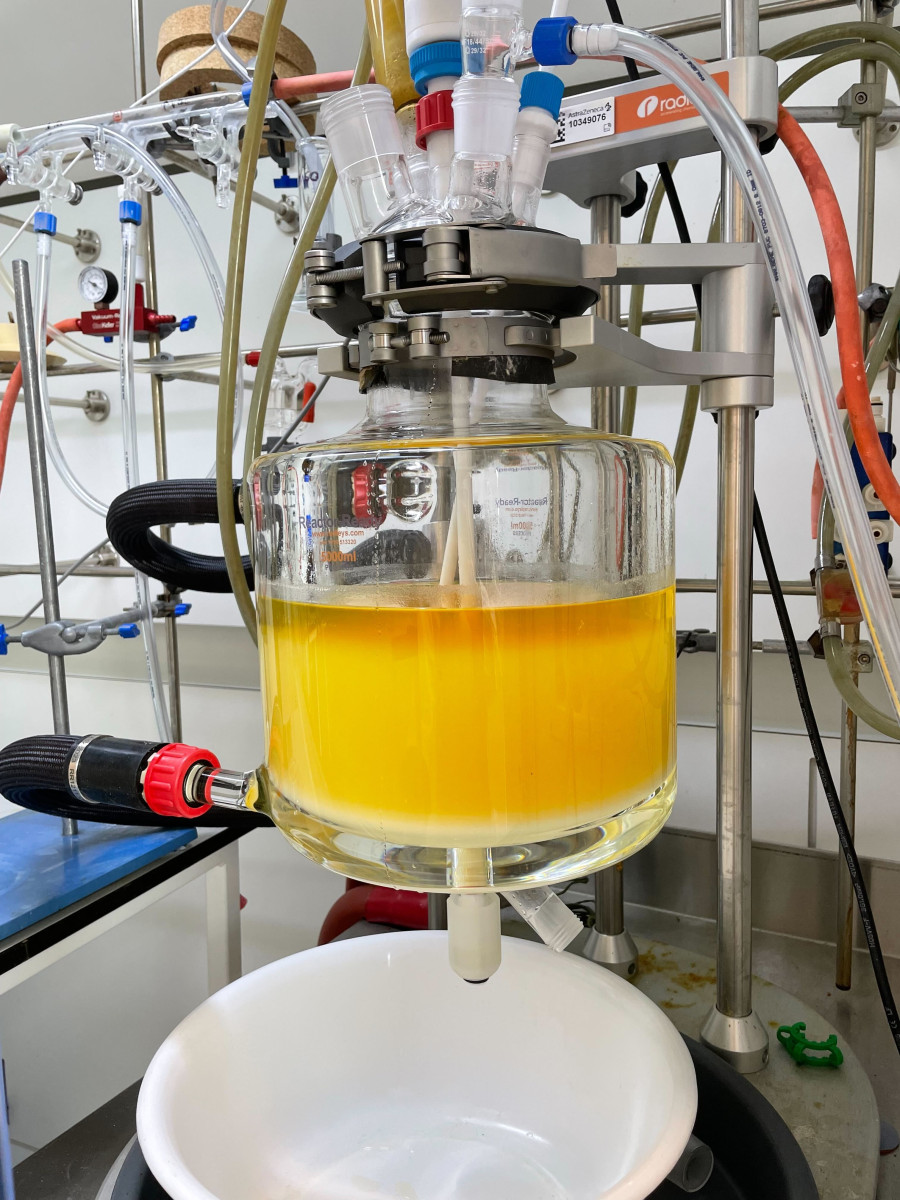
Scientists have developed a simple, low-cost method to drive key chemical reactions, which could make large-scale drug manufacturing, faster, more accessible and affordable.
The new study, published in the journal today by The University of Ô°ÇøÒùÂÒ, describes how complex light or electricity-mediated methods currently used across modern chemistry could be replaced by those driven by a simpler technology - heat.
By heating two common, inexpensive chemicals together, the researchers triggered ‘electron transfer’ reactions that chemists use to make many of our everyday products and medicines.
Lead researcher, , Lecturer in Synthetic Organic Chemistry at The University of Ô°ÇøÒùÂÒ, said: “Our goal was to develop a broadly accessible and low-cost way to promote electron transfer reactions for industrial applications.
“By using something as simple as heat - something every chemistry lab already has - we’ve created a process that can be scaled more easily and used by companies without the need for expensive, specialised equipment, opening up new possibilities for chemists all over the world.�
Many modern chemical reactions rely on photochemical (light) or electrochemical (electricity) technologies to kick start ‘electron transfer reactions’ – a process that involves transferring electrons between molecules to make medicines, or other essential materials. Although these high-tech methods are powerful and effective, they can be difficult to scale up for industrial use as they require specialist reactors and costly infrastructure.
“We’ve created a process that can be scaled more easily and used by companies without the need for expensive, specialised equipment, opening up new possibilities for chemists all over the world.�
The Ô°ÇøÒùÂÒ team’s new approach achieves the same result using only heat and two widely available chemicals - a type of azo compound and a formate salt. When heated together in a standard industrial reactor, these reagents naturally form a highly reactive molecule known as ‘carbon dioxide radical anion’ - a simple yet powerful species capable of driving a wide range of chemical transformations.
Working with Dr James Douglas from AstraZeneca, the research team successfully demonstrated the scalability of the developed method and tested it on a variety of other chemical reactions used in drug discovery.
, Lecturer in Computational & Theoretical Chemistry at The University of Ô°ÇøÒùÂÒ, added: “Radical chain chemistry underpins so many areas of science and manufacturing, so we hope this simple initiation method will be of wide use across both industry and academia. Beyond large-scale applications, it could also become a valuable tool for researchers studying new chemical reactions.â€�
This research was published in the journal .
DOI: 10.1038/s44160-025-00919-z
The University of Ô°ÇøÒùÂÒ is globally renowned for its pioneering research, outstanding teaching and learning, and commitment to social responsibility. We are a truly international university – ranking in the top 50 in a range of global rankings – with a diverse community of more than 44,000 students, 12,000 staff and 550,000 alumni from 190 countries. Sign up for our e-news to hear first-hand about our international partnerships and activities across the globe.